Kakobuy Climbing Shoes Spreadsheet Guide
Kakobuy Climbing Shoes Spreadsheet Guide
You can't choose climbing shoes based only on looks, popularity, or the size the seller lists. The real problem to solve is: how to organize scattered product information into a comparable list of candidates, then have kakobuy verify color, size, model, and visible appearance, so you can catch mistakes before the return window closes.
This article is for buyers comparing multiple Chinese product pages and haven't finalized a climbing shoe model and size. After reading, you can create a spreadsheet filtered by foot shape, closure type, and route type, and generate a final list of candidates for verification. This article is not for those needing remote diagnosis of foot problems, looking for professional protective equipment certification, or judging rubber performance and authenticity from product images alone.
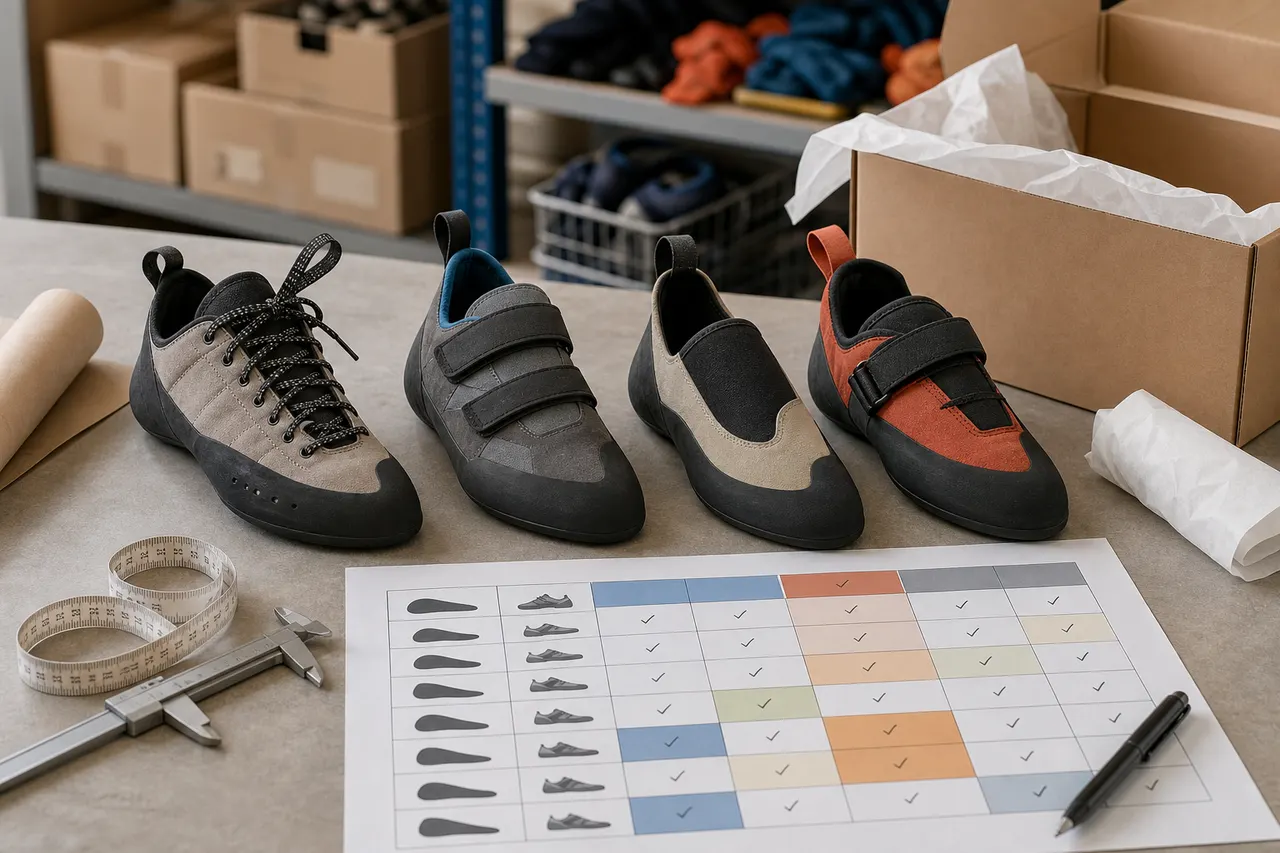
Figure: The filtering process from foot shape, closure type, usage scenario to warehouse QC.
First determine your climbing scenario and acceptable fit
Before collecting products, write down your primary usage scenario. Choose one main task at a time, such as indoor bouldering, lead climbing, long routes, or daily training. If you expect one pair to cover all scenarios, the spreadsheet will easily fill with many seemingly suitable candidates that can't be ranked.
Then record your acceptable fit:
Comfort fit: toes slightly curled or natural, prioritizing long wear and frequent training.
Snug fit: minimal empty space in the shoe, suitable for short climbs needing more direct feel, but not at the cost of pain, numbness, or circulation issues.
Unsure: without trying experience of the same brand and last, don't assume you must downsize; mark the size column as "pending seller to provide insole length or size chart."
Don't write "smaller is more professional" as a filter rule. The EU size, domestic size, foot length suggestion, and seller's custom sizing on product pages may not be the same system. Your usual sneaker size is only a reference, and cannot directly determine climbing shoe size.
It's advisable to first measure both feet length and circumference at the widest point, and record measurement method, sock thickness, and date. Use the larger foot as the primary filter basis. If you have obvious hallux valgus, arch pain, toe injuries, or circulation issues, seek qualified professional advice first, not rely on the spreadsheet to compress sizes.
What a spreadsheet can help filter and what it cannot prove
The value of a spreadsheet is to preserve evidence, expose information gaps, and standardize comparison, not to turn incomplete page information into definite conclusions. 📋
It's recommended to have one row per product, with at least the following fields:
Product ID or original page identifier
Displayed name
Seller name
Page verification date
Price and currency
Domestic shipping within China
Available sizes, colors, and styles
Whether size chart is visible
Listed insole length, foot length recommendation, and units
Foot shape tendency and toe box shape
Symmetric or asymmetric last
Flat, moderate downturn, or aggressive downturn
Velcro, lace, or slip-on
Listed materials for upper and sole
Primary route type
Questions to confirm with seller
QC inspection result
Return status and deadline
Evidence completeness
The spreadsheet can confirm what the page showed at that time, and can calculate total cost and ranking scores; but it cannot prove actual rubber compound, durability, authenticity, exact last, long-term comfort, or real climbing performance. Soft-looking images don't mean the upper is actually soft; similar sole texture doesn't mean the material is the same.
Price, inventory, size, material, seller, shipping, return conditions, and page status should be re-verified before placing an order. The verification date of platform information mentioned in this article is August 27, 2026; specific products and routes should always be based on the checkout page, seller replies, and current kakobuy display.
Build a candidate list by foot shape, last, and upper structure
First fill in your needs based on your foot shape, then record page evidence—don't reverse-engineer your needs to match a shoe you like. You can roughly record toe arrangement as longest big toe, first two toes similar, or longer middle toes, and supplement with wide, normal, or narrow forefoot, high or low instep, and whether heel tends to slip.
If the product page doesn't specify last information, enter "unknown," and don't assert it suits wide or narrow feet based only on overhead photos. Toe profile, downturn, and upper segmentation can be clues for verification, but cannot replace actual try-on.
When building the candidate list, use a three-tier evidence mark:
A: Page has clear size chart, spec options, and multi-angle real photos; key data readable.
B: Some specs visible, but missing insole length, width, or last description; need seller supplement.
C: Only marketing images, vague sizing, or inconsistent options; temporarily not enter the order list.
Upper structure should also be recorded separately. Natural leather, synthetic, lining, and stretch fabric may have different stretch behavior, but only enter if the page explicitly states it. If the seller only writes "breathable," "high elasticity," or "professional," treat them as unquantified promotional descriptions, not core scoring basis.
Who suits Velcro, lace, or slip-on
Closure type mainly affects adjustability range, on/off speed, and upper coverage, not automatically determines performance.
Closure type | Main advantages | Main limitations | Better suited needs |
|---|---|---|---|
Velcro | Quick on/off, easy to loosen between training sessions | Fewer adjustment points, straps and hook-and-loop need checking | Indoor training, bouldering, frequent on/off |
Lace | Zone-adjustable tightness, more flexible for high/low instep | Slower on/off, laces and eyelets add inspection items | Long routes, foot shapes needing fine adjustment |
Slip-on | Simple structure, less coverage over instep | Limited adjustability, harder to compensate when size is off | Those familiar with similar lasts, value quick on/off |
If the page images and spec options disagree on closure type, mark that row as "spec conflict," and confirm the specific style before ordering. Don't assume the main image is the selected SKU, and don't treat "same style different color" as identical structure.
Compare trade-offs for bouldering, lead climbing, and long routes
Bouldering usually involves short, move-intensive attempts, so buyers may focus on toe rubber, heel coverage, and quick on/off. Lead climbing needs a balance of support, sensitivity, and prolonged wear. Long routes or multi-pitch rely more on sustainable fit and adjustability; excessive tightness can quickly amplify discomfort.
You can create an internal 100-point score for candidates, but the score only represents match with your needs:
Foot length and size evidence: 30 points
Foot shape and adjustment match: 25 points
Route type match: 20 points
Page evidence completeness: 15 points
Clarity of return boundary: 10 points
Do not automatically assign middle scores when any key item is unknown; instead mark "to be confirmed." This avoids products with the least evidence getting inflated rankings because they lack obvious flaws. 🧗
If one shoe is used for multiple scenarios, add a "secondary scenario" column, but don't let secondary scenarios override the primary task. Keeping three to five final candidates is usually easier to verify than collecting dozens of vague links.
How to reduce wrong-size risk when size info is insufficient
When size info is lacking, first gather evidence, then discuss sizing down or up. Recommend handling in this order:
Save the size chart and units shown on the product page that day.
Confirm whether the table describes foot length, shoe inner length, insole length, or outsole length.
Ask the seller for actual measurements of the target size and measurement method.
Compare with your own foot data, not just your usual shoe size.
Check whether the chosen SKU supports returns, and who bears domestic return shipping in China.
If key dimensions cannot be confirmed, move the product out of the final list.
Different measurement standards cannot be directly subtracted. For example, insole length may not equal available inner space, and outsole length of a downturned last is not suitable as foot length basis. If the seller only replies "normal size" or "recommend one size down," keep asking for verifiable data.
When trying an unknown last for the first time, prioritize products with clear size info and return boundaries, not just the lowest price. Buying two sizes and returning one may increase capital tie-up, domestic return shipping, and operational risk, and may be limited by product category or seller rules.
QC photos check toe, rand, sole, and left-right consistency
kakobuy's inspection focuses on visible information like style, quantity, color, size, and model. QC photos are good for catching obvious mis-shipments and appearance issues, but cannot prove fit, rubber performance, structural integrity, or long-term durability. 🔍
After receiving QC, check in this order:
Size marking: Are left and right labels consistent, and match the ordered SKU?
Overall pairing: Color, closure, shape, and accessories consistent left/right.
Toe: Is toe cap rubber obviously off-center? Any visible gaps, cracks, or unusual creases.
Rand: Check along the shoe for obvious delamination, lifted edges, or height differences.
Sole: Tread, markings, and appearance consistent; no obvious cuts, contamination, or deformation.
Heel: Is the heel structure symmetric, pull tab and seams intact.
Closure parts: Velcro, laces, eyelets, or elastic opening complete and undamaged.
Image limitations: If angles, clarity, or lighting insufficient, request additional photos that answer specific questions.
Set each check item to one of three states: "pass," "abnormal," "unable to judge," and keep original photos and inspection date. Don't rewrite "unable to judge" as "pass." If problems may affect safety or shoe integrity, pause international shipping and first ask about return options.
Before ordering, confirm specs, return boundary, and safety limits
Before placing an order, re-check product name, seller, size, color, closure type, quantity, and page status. Price and inventory may change, so old spreadsheet records cannot replace checkout page info.
According to platform information dated August 27, 2026, kakobuy's total fees may include product price, domestic shipping in China, international shipping, and customs-related fees; international shipping depends on weight, route, and destination. The platform materials also described a return window within 120 hours after warehouse arrival, and listed exceptions such as custom items, restricted items, and removal of packaging, tags, or accessories. This information is time-sensitive; you must reconfirm on the current page or customer service before ordering, and not treat records from this article date as permanent policy.
For climbing shoes especially confirm:
Whether returns are still allowed after trying on or removing tags.
Whether requesting additional photos affects processing time.
What in-platform process is available if seller refuses return.
Who bears domestic return shipping and other fees within China.
Whether any return channel exists after international shipment.
Climbing shoes are not life-safety equipment like ropes, harnesses, or belay devices, but obvious delamination, cracks, severe deformation, or left-right inconsistency may affect movement and stability. Do not use structurally abnormal shoes for climbing; stop processing and seek return or professional inspection. ⚠️
Generate final candidate list and submit to kakobuy for verification
The final list keeps only products with sufficient evidence, selectable specs, and answered key questions. Recommended output fields: candidate rank, product ID, target SKU, foot shape match reason, primary scenario, size basis, unresolved questions, QC requirements, return deadline, and total cost estimate.
Total cost can be recorded as:
Product price + domestic shipping within China + estimated international shipping share + possible customs-related fees + foreseeable service fees
Estimated international shipping is just a budget, not a final price. After climbing shoes arrive at warehouse and are weighed, update estimates based on destination, package weight, volume, and available routes. If considering consolidation with other items, compare saved repeated fixed fees, possible increased volumetric weight, package value, and single-package loss risk; don't assume consolidation is always cheaper.
When submitting for kakobuy verification, use answerable questions, e.g., "Please confirm both left and right shoe size labels are EU 41, and provide additional photos of both soles completely," not just "please check carefully." After receiving results, backfill evidence into the original row; if target SKU, size labels, or visible structure don't match the order, pause further shipping within the applicable return window.
How much this method saves depends on timely exclusion of wrong sizes, mis-shipped items, and unnecessary return costs; without actual product and shipping samples, no fixed savings figure can be given. The cost is time for measuring, verifying, and waiting for supplementary photos, and it cannot eliminate risks of no try-on, unknown materials, and policy changes.
This approach suits buyers willing to trade evidence for lower probability of wrong choice and able to check QC promptly after warehouse arrival. It is not recommended for urgent shipping, inability to measure feet, product pages lacking key specs, or if you know there is structural abnormality but plan to use directly. The final goal is not to find the highest-scoring shoe in the spreadsheet, but to keep candidates with verifiable specs, acceptable risk, and fit for primary climbing scenario. ✅
Agent platform shopping FAQ
1. What is the purpose of using a spreadsheet when shopping with kakobuy?
Since agent platforms like kakobuy generally don't show products directly, a spreadsheet is necessary to locate the items you want and obtain their purchase links. Another option is to ask for advice on Reddit or Discord—though the products suggested there are usually very good, the process can be time-consuming. These spreadsheets are often built over an extended period by collecting information from those communities.
Browse our latest products and find your next favorite item.